
The Value of Tele-Nutrition in Modern Healthcare
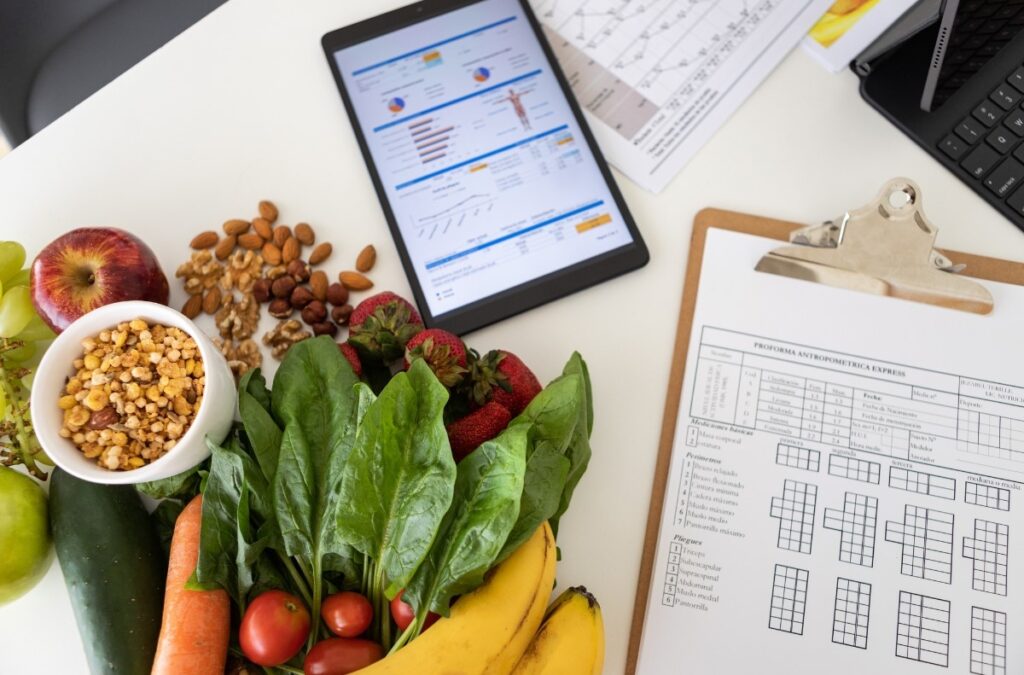
Nutrition has always been a cornerstone of preventive and therapeutic healthcare. Yet, access to qualified nutritionists remains deeply uneven—especially in rural communities, low-income regions, and post-pandemic health systems. According to the World Bank, more than 60% of primary health facilities in Sub-Saharan Africa lack a trained nutrition professional, leaving millions without adequate guidance. This gap has accelerated the rise of tele-nutrition—the integration of digital health tools and remote consultations to deliver evidence-based nutrition care beyond barriers of geography, time, and cost. What Is Tele-Nutrition? Tele-nutrition is the delivery of medical nutrition therapy and dietary counseling using digital communication technologies such as: Through these channels, registered dietitians and nutrition professionals can: Tele-nutrition does not replace clinical care—it acts as a powerful extension of it, expanding the reach and impact of healthcare providers. According to the Journal of the Academy of Nutrition and Dietetics (2022), tele-nutrition has shown equal or improved outcomes in areas such as weight management, glycemic control, and dietary adherence when compared to traditional in-person consultations. The Growing Importance of Tele-Nutrition 1. Accessibility 2. Efficiency 3. Scalability The Future of Nutrition Care: Smarter, Digital, and Connected Modern tele-nutrition platforms such as DocTwin are taking this concept even further by offering integrated, secure solutions for nutrition professionals. With DocTwin, dietitians can: Tele-nutrition is not just a trend—it’s a revolution in how nutrition care is delivered. By combining technology, data, and professional expertise, it makes nutrition care more accessible, efficient, and scalable, paving the way for a healthier and more connected future in healthcare.
Behind the Scenes: How We Filtered Patients and Conducted the PMP-LLM Study
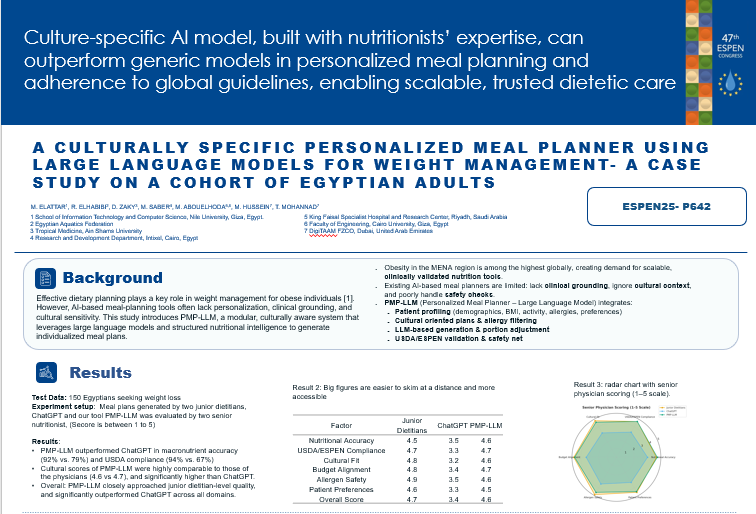
It All Starts With People, Not Code When we think about artificial intelligence in nutrition, it is easy to focus on the algorithms and models that power meal planning. Yet, in practice, the real work begins with the people. For our study presented at ESPEN 2025, where we introduced PMP-LLM—a culturally specific, AI-driven personalized meal planner for weight management—the foundation was not just in coding or datasets. It was in the meticulous process of patient selection, filtering, and structured evaluation. Finding the Right 378 Voices We chose to work with obese Egyptian adults, a group where the health need is both pressing and representative of a broader regional challenge. After careful screening, we recruited 378 participants, with an average age of 34.2 years and a mean BMI of 33.8. Importantly, all participants were otherwise healthy, allowing us to focus squarely on the nutritional aspects of the intervention without interference from uncontrolled chronic illnesses. More Than BMI: The Art of Filtering Filtering participants went far beyond defining age ranges or BMI thresholds. It was about ensuring that the AI-generated recommendations were both safe and relevant. Around 22% of the participants had dietary restrictions, ranging from religious practices to lifestyle choices such as vegetarianism. Another 13% reported food allergies, which had to be flagged as strict exclusions in every meal plan generated. On top of this, we factored in the cultural context. Food is deeply tied to tradition, identity, and daily life, so we filtered out foods that were uncommon, unavailable, or socially unacceptable in an Egyptian context. This three-layer filtering—dietary restrictions, allergies, and cultural fit—was critical to creating a study that measured real-world effectiveness rather than theoretical accuracy. Four Meal Plans, One Big Question Once the cohort was established, each participant received four sets of meal plans. The first was designed by senior physicians, serving as the reference standard. The second came from junior dietitians, representing everyday clinical practice. The third set was generated using a commercial AI tool, ChatGPT, which we used as a benchmark for current publicly available technology. Finally, participants received plans from our own system, PMP-LLM, developed by DigiTAAM. This system integrates detailed patient profiling, a culturally aware food database, validation against USDA and ESPEN guidelines, portion control, and multi-layered safety checks. Putting AI to the Test Evaluation was just as structured as the filtering process. Two senior physicians independently assessed all meal plans, using a five-point scoring system to measure nutritional accuracy, adherence to USDA and ESPEN guidelines, cultural appropriateness, allergen safety, and alignment with patient preferences. This evaluation framework ensured that we were not only comparing numbers and nutrient balances, but also testing the lived experience of following such a plan. Numbers That Tell a Story The results were compelling. PMP-LLM outperformed commercial AI systems in both macronutrient accuracy and USDA compliance . Its cultural compatibility score averaged 4.6 out of 5, which was nearly indistinguishable from physician-designed plans at 4.7 and substantially higher than the 3.2 achieved by generic AI systems. While junior dietitians retained a slight edge in nuance and allergen sensitivity, PMP-LLM consistently delivered plans that matched or closely approached dietitian-level quality. What We Learned Along the Way The key lesson from this experience is clear: personalization does not begin with the algorithm—it begins with the patient. By embedding safety checks, cultural awareness, and careful filtering into both the study design and the AI system itself, we were able to demonstrate that AI can move beyond generic suggestions to deliver clinically relevant, culturally specific, and patient-centered solutions. Beyond the Study: The Bigger Picture As we look forward, the implications are significant. With systems like PMP-LLM, it becomes possible to scale nutrition planning to large populations while still respecting the individuality of each patient. For regions like the Middle East and North Africa, where obesity rates are among the highest globally, this approach represents not just an innovation in technology, but a new pathway to more accessible and effective healthcare.
The Role of Technology in Modern Healthcare
Technology is transforming healthcare, making it more efficient, accessible, and personalized. Let’s explore how. Technologies like telemedicine, wearable devices, and AI are revolutionizing healthcare delivery. InTwin leverages AI to provide personalized nutrition and health management. Fact: The telehealth market is projected to grow from USD 25.4 billion in 2020 to USD 55.6 billion by 2025, at a CAGR of 16.9% (MarketsandMarkets). Figure: Wearable health tech devices can reduce hospital readmission rates by 38%, according to a study by Deloitte. Modern healthcare is increasingly reliant on technology to improve patient outcomes. InTwin integrates advanced tech to offer personalized health solutions, contributing to this ongoing transformation.
Understanding Malnutrition and How We Can Combat It

Malnutrition is a global issue affecting millions. Understanding its causes and solutions is crucial for combating this challenge. Malnutrition stems from various factors, including inadequate food intake, poor dietary choices, and socio-economic conditions. InTwin aims to provide accessible nutritional advice to underserved populations. Fact: According to the World Health Organization, malnutrition affects 462 million adults and 52 million children globally.Figure: Implementing targeted nutritional interventions can reduce malnutrition rates by up to 20%, as noted in a report by the Global Nutrition Report.
The Future of Personalized Nutrition with AI
In the rapidly evolving world of technology, artificial intelligence (AI) is revolutionizing various sectors, including healthcare and nutrition. Personalized nutrition, powered by AI, is the next big step in this transformation. AI enables personalized dietary plans tailored to individual health profiles, preferences, and goals. By analyzing vast amounts of data, AI can provide precise recommendations that are far superior to generic diet plans. The future of nutrition is personal. With InTwin, DigiTAAM is at the forefront of this revolution, offering personalized dietary insights powered by advanced AI.